
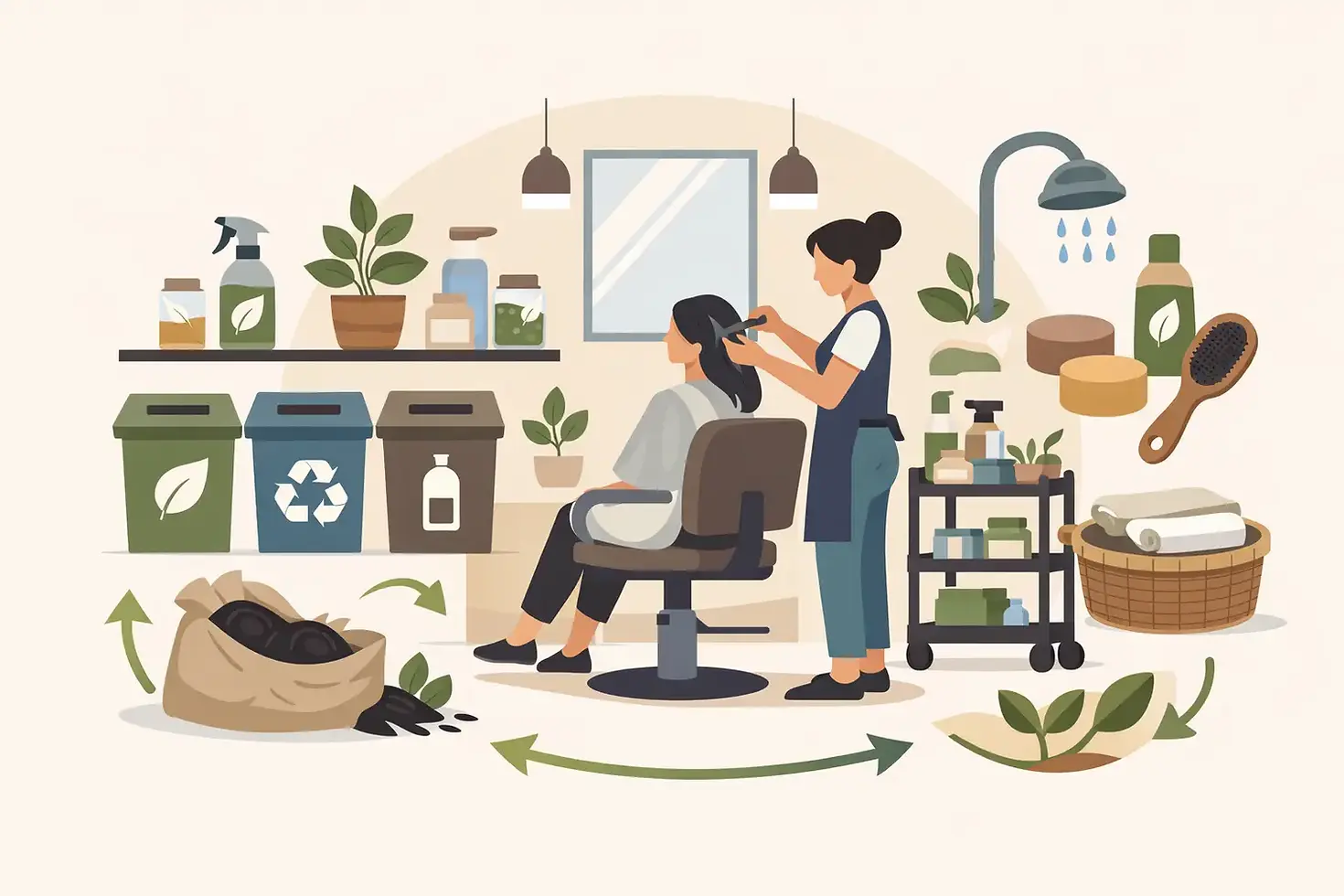
What Makes a Zero Waste Hair Salon?
A good haircut or colour service should leave you feeling more like yourself, not wondering how much plastic, foil and chemical waste sat behind the mirror to make it happen. That tension is exactly why the idea of a zero waste hair salon matters. For many clients, salon visits are no longer just about the end result. They are also about whether the process reflects the values they live by.
The truth is, hairdressing has long been a waste-heavy industry. Colour services often rely on single-use materials. Product shelves can be full of plastic. Water and energy use can be high. And for clients who care about sustainability, that can make a regular appointment feel harder to justify, even when they still want expert results.
A zero waste hair salon offers a different model. Not a perfect one, because perfection is rarely how real sustainability works, but a more thoughtful one. It asks better questions about what gets used, what gets thrown away, what can be reused, and what can be avoided altogether. Most importantly, it treats those questions as part of professional salon practice, not an afterthought.
What a zero waste hair salon actually means
Despite the name, a zero waste hair salon does not usually mean a salon that creates absolutely no waste. In most service businesses, especially those involving chemicals, hygiene standards and technical treatments, some level of waste is still difficult to avoid. The more honest definition is a salon that is actively designed to reduce waste at every practical point.
That starts with intention. A salon with a zero waste mindset looks closely at daily operations, from the towels and capes to the packaging on retail products, from how colour is measured to how hair clippings are handled. It chooses systems that reduce excess rather than accepting waste as normal.
This distinction matters. Sustainability in salons can sometimes be reduced to surface-level gestures, like a few indoor plants or recycled paper business cards. Those details are fine, but they are not the core of the work. A genuinely waste-conscious salon makes changes where waste is created most often - in service delivery, stock management and product choice.
Where salon waste usually comes from
To understand what sets a zero waste hair salon apart, it helps to look at the common pressure points.
Packaging is one of the most obvious. Shampoos, treatments, styling products and colour lines can generate a steady stream of plastic bottles, tubes, pumps and boxes. If a salon uses high volumes of products every week, even small packaging decisions add up quickly.
Then there are single-use items. Foils, gloves, neck strips, cotton pads and disposable mixing tools are often built into salon routines. Some are harder to replace than others, particularly where hygiene and safety are involved, but many are used simply because that is how the industry has operated for years.
Water and energy are another part of the picture. Frequent rinsing, hot water, washing machines, dryers and heated tools all contribute to the environmental footprint of a salon. Waste is not only what ends up in the bin. It is also about unnecessary resource use.
Finally, there is product waste itself. Overmixed colour, expired stock, unused retail inventory and poor portion control can all create avoidable rubbish. In a busy salon, those losses can become routine if no one is paying attention.
How a zero waste hair salon works in practice
A zero waste approach is less about one dramatic change and more about dozens of careful decisions made consistently.
One of the biggest shifts is choosing products with lower-impact packaging, refill systems or bulk supply options where possible. This reduces the amount of disposable packaging entering the salon in the first place. It also encourages more deliberate purchasing, which can cut over-ordering and waste.
Service preparation matters too. Precise colour mixing helps reduce leftover product. Reusable towels, capes and bowls replace throwaway alternatives. Thoughtful appointment planning can minimise unnecessary washing, reheating and repeated product use. None of this sounds glamorous, but it is often where real impact happens.
Hair waste is another area that deserves more attention than it usually gets. Hair clippings are often seen as inevitable rubbish, yet in some salon systems they can be collected for beneficial reuse. Not every salon has access to the same recycling or repurposing pathways, and geography can make a difference here, but treating hair as a resource rather than automatic waste is part of the mindset.
The same applies to metals, paper, cardboard and selected plastics used in salon operations. A zero waste hair salon usually puts systems in place to separate materials properly instead of tossing everything into general rubbish. Again, it is not always perfect. Local recycling infrastructure varies, and not every material can be recovered. But effort and transparency count.
Why product ethics matter as much as waste
Waste reduction is only one part of what many clients are looking for. A salon can reduce some rubbish and still rely on products that conflict with a client’s broader values. That is why the conversation often needs to include vegan-friendly and cruelty-free product choices alongside sustainability.
For many people, ethical beauty is interconnected. They care about waste, but they also care about ingredients, animal testing, harsh formulations and the wider impact of consumption. A salon that understands this does not treat these issues as separate boxes to tick. It sees them as part of the same responsibility.
That is especially relevant in professional colour work, where performance matters. Clients should not have to choose between beautiful blonde results and a more conscious service model. The best ethical salons work hard to prove that technical excellence and sustainability can sit together, even if that means being more selective about the brands and systems they use.
The trade-offs are real
It would be easy to pretend every sustainable choice is simple, but it is not. Some lower-waste alternatives cost more. Some take longer to implement. Some are limited by supplier access, council systems or the realities of professional hair services.
Foils are a good example. In some services, they still play an important technical role, particularly for detailed blonding work. The more useful question is not always, can this be eliminated immediately? Sometimes it is, can this be reduced, recycled where possible, or used more intentionally?
This is where trust matters. Clients are usually not expecting perfection. What they are looking for is honesty, effort and a clear sense that the salon has thought carefully about the impact of its choices. A salon that speaks plainly about what it has changed, what it is still working on, and why some trade-offs remain will often feel more credible than one making sweeping claims.
Why clients are choosing this model
For ethically minded clients, a zero waste hair salon offers practical relief. It reduces the disconnect between personal values and personal care. Instead of feeling that beauty comes with a hidden environmental cost, clients can sit in the chair knowing the salon is trying to do things differently.
That changes the experience. The service becomes more than transactional. It feels intentional. It feels aligned. And for many people, that sense of alignment is part of what luxury means now - not excess, but care. Not more product, more packaging and more waste, but better choices made well.
This is also why sustainability cannot be treated as a side note. Clients who seek out ethical salons are often deeply informed. They read labels. They notice greenwashing. They want substance, not slogans. A salon that truly operates with purpose builds stronger loyalty because it gives people something more meaningful than a standard appointment.
At Mane Ethical Hairdressing, that belief sits at the heart of the salon experience. High-level hairdressing and ethical responsibility are not competing priorities. They belong together.
How to spot a genuinely zero waste hair salon
If you are looking for a salon that takes waste seriously, pay attention to what it talks about and what it can explain clearly. A meaningful commitment usually shows up in specific practices, not vague language. The salon should be able to tell you how it approaches product selection, packaging, recycling, energy use or service waste without sounding rehearsed.
It also helps to notice whether sustainability is integrated into the whole experience or just mentioned in passing. Does the salon’s ethos feel consistent? Are ethical choices reflected in the products used, the way services are delivered and the language around beauty? If so, you are more likely dealing with a business that sees sustainability as part of its identity.
A zero waste hair salon is not about moral perfection or aesthetic minimalism. It is about responsibility in a very practical setting. Hair salons are places of transformation, confidence and self-expression. They can also be places where beauty is handled with more care for the world around us.
That shift does not happen all at once. It happens choice by choice, appointment by appointment, through businesses willing to rethink what professional hairdressing should look like. And for clients who want their haircare to reflect their values as well as their style, that is a very good place to start.


Comments