
Can Bleach Damage Curls? What Your Hair Needs
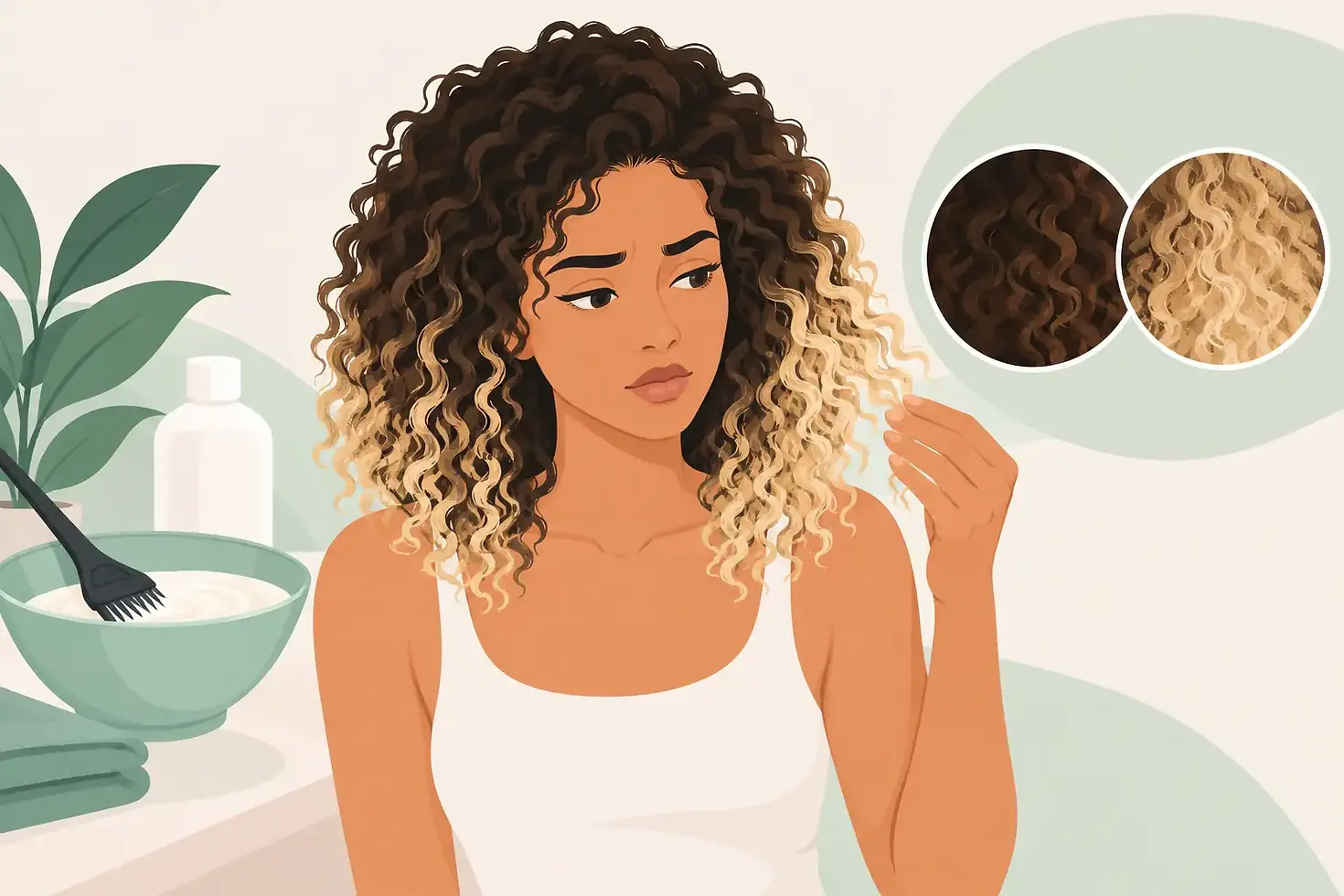
A bright new blonde can feel like a fresh expression of self. But if you wear your hair curly, the question behind the inspiration photo is often more practical: can bleach damage curls? Yes, it can - particularly when hair is lightened too quickly, too often, or without a plan that respects its current condition. That does not mean curls and blonde are incompatible. It means the process needs expertise, patience and care.
At Mane Ethical Hairdressing, we believe beautiful colour should never come at the expense of your hair’s health or the values you bring to the salon chair. For curly clients, that starts with an honest conversation about what your hair can comfortably do now, and what may be better achieved over several appointments.
Can bleach damage curls? The honest answer
Bleach works by opening the hair’s outer layer and breaking down its natural pigment. This chemical change allows the hair to become lighter, but it also affects the structures that give each strand strength, flexibility and moisture balance.
Curly hair is not automatically weaker than straight hair, but its shape creates natural points of vulnerability. Every bend and coil in the strand can make it harder for the scalp’s natural oils to travel down the hair shaft. That is why curls often feel drier at the mid-lengths and ends, even before any colour service. When bleach is added, those dry areas can become more porous and more prone to breakage.
The damage is not always immediate or dramatic. Sometimes the first sign is that curls no longer spring back after wash day. You may notice increased frizz, a rougher feel, tangles that were not there before, or ends that look thin and uneven. In more severe cases, the curl pattern can loosen, become inconsistent or stop forming in sections where the hair has been overprocessed.
That said, a change in curl pattern is not inevitable. The result depends on your starting condition, previous colour history, texture, home care and how much lift you are asking for. A carefully planned partial lightening service is very different from taking dark, previously coloured hair to a pale blonde in one sitting.
Why curly hair responds differently to lightening
Healthy hair has an outer cuticle made of overlapping layers. When those layers are relatively smooth, the strand holds onto moisture more effectively and reflects light. Bleach raises and disrupts that cuticle as it does its job. The more processing required, the greater the potential impact on the hair’s protein and moisture balance.
For curls, that balance matters deeply. Curl definition relies on the hair having enough elasticity to stretch and return to shape. Hair that has been pushed beyond its comfort zone can feel overly soft, gummy when wet or dry and brittle at the same time. It may snap during detangling or fail to clump into its usual curl families.
Porosity also plays a role. Highly porous curls absorb water and product quickly, but they can lose moisture just as fast. Lightened hair often becomes more porous, so your familiar routine may no longer deliver the same result. A conditioner that once gave you soft, defined curls might suddenly feel too light, while styling products may need to be layered differently.
This is not a reason to avoid colour altogether. It is a reason to treat blonde work as a considered technical service, not a quick cosmetic change.
The risks increase when hair has a history
Your hair carries a record of what has been done to it, even if the colour looks grown out. Previous bleach, box dye, permanent colour, smoothing treatments, heat styling and frequent sun exposure all affect how a strand responds to its next service.
Box dye deserves particular care. Dark artificial colour can be difficult to remove predictably, and attempting to lift it aggressively may place unnecessary stress on already dry curls. Metallic salts from some at-home colour products can also create unpredictable results. Being completely open about your colour history helps your stylist make safer choices. There is no judgement in that conversation - just a better basis for protecting your hair.
Hair that is already breaking, excessively shedding, feeling stretchy when wet or struggling to hold its curl pattern may need a recovery period before bleaching. Sometimes the most caring colour plan begins with trims, moisture-focused care and a gentler transition rather than immediate lightening.
A healthier way to go blonde with curls
The safest approach is usually gradual. Rather than chasing the lightest possible result at the first appointment, a skilled colourist can create dimension with finely placed highlights, face-framing brightness or a lived-in blonde that leaves more of your natural depth untouched.
This approach gives curls more breathing room. It also often creates a softer grow-out, which can reduce the need for frequent full-head bleaching. Less processing over time is generally kinder to the hair, your schedule and the resources involved in maintaining high-maintenance colour.
A consultation should cover more than the shade you want. Your stylist should look at your curl pattern, density, porosity, current condition, past chemical services and the way you actually wear your hair. A colour that looks effortless in a photo may require a very different technique on tight coils than on loose waves.
It is also worth discussing your non-negotiables. If keeping your curl pattern intact matters more than reaching platinum, say so. If you are willing to move slowly for a brighter end result, that shapes the plan too. Great colour work is collaborative. It balances the visual goal with what your hair can sustain.
Care between appointments matters just as much
Bleached curls benefit from a simpler, more intentional routine rather than a crowded bathroom shelf. Gentle cleansing, regular conditioning and careful detangling are the foundation. Use lukewarm water where possible, and avoid rough towel drying that can catch and stress fragile strands. A soft cotton T-shirt or microfibre wrap is a kinder option.
The right mix of moisture and strengthening care will depend on your hair. If your curls feel dry, dull and rough, they may need more hydration and conditioning. If they feel limp, overly stretchy or weak, a targeted strengthening treatment may be useful. Too much protein can leave some curls stiff, while too much heavy moisture can weigh others down. Pay attention to how your hair responds rather than following a rigid routine.
Heat is another trade-off to consider. Bleached curls are more vulnerable to high temperatures, so frequent hot tools can compound the stress of lightening. When you do use heat, apply protection and keep the temperature as low as your styling goal allows. Air-drying or diffusing gently can help preserve both definition and condition.
Regular trims are not a punishment for having colour. They are a practical way to prevent split ends travelling further up the hair shaft. Keeping the ends tidy can make curls look fuller, healthier and easier to style, especially after a lightening service.
Choosing colour with care and conscience
For many people, the decision to bleach is not only about hair health. It is also about choosing services that align with a more conscious way of living. Colour work involves products, water, energy and salon waste, which is why intentional choices matter. A thoughtful salon experience considers the result on your head alongside the impact of the service itself.
There is no perfect beauty routine, and ethical care is not about demanding perfection from yourself. It is about asking good questions, avoiding unnecessary excess and choosing professionals who take their responsibility seriously. A slower blonde journey can be a beautiful expression of that approach: less rushing, fewer corrective appointments and a result designed to last.
If your curls are healthy and your expectations are realistic, bleach can be part of your look without automatically sacrificing your texture. Start with a consultation, be honest about your hair history and give the process the time it deserves. Your curls do not need to be an obstacle to colour - they simply deserve to be part of every decision.


Comments