
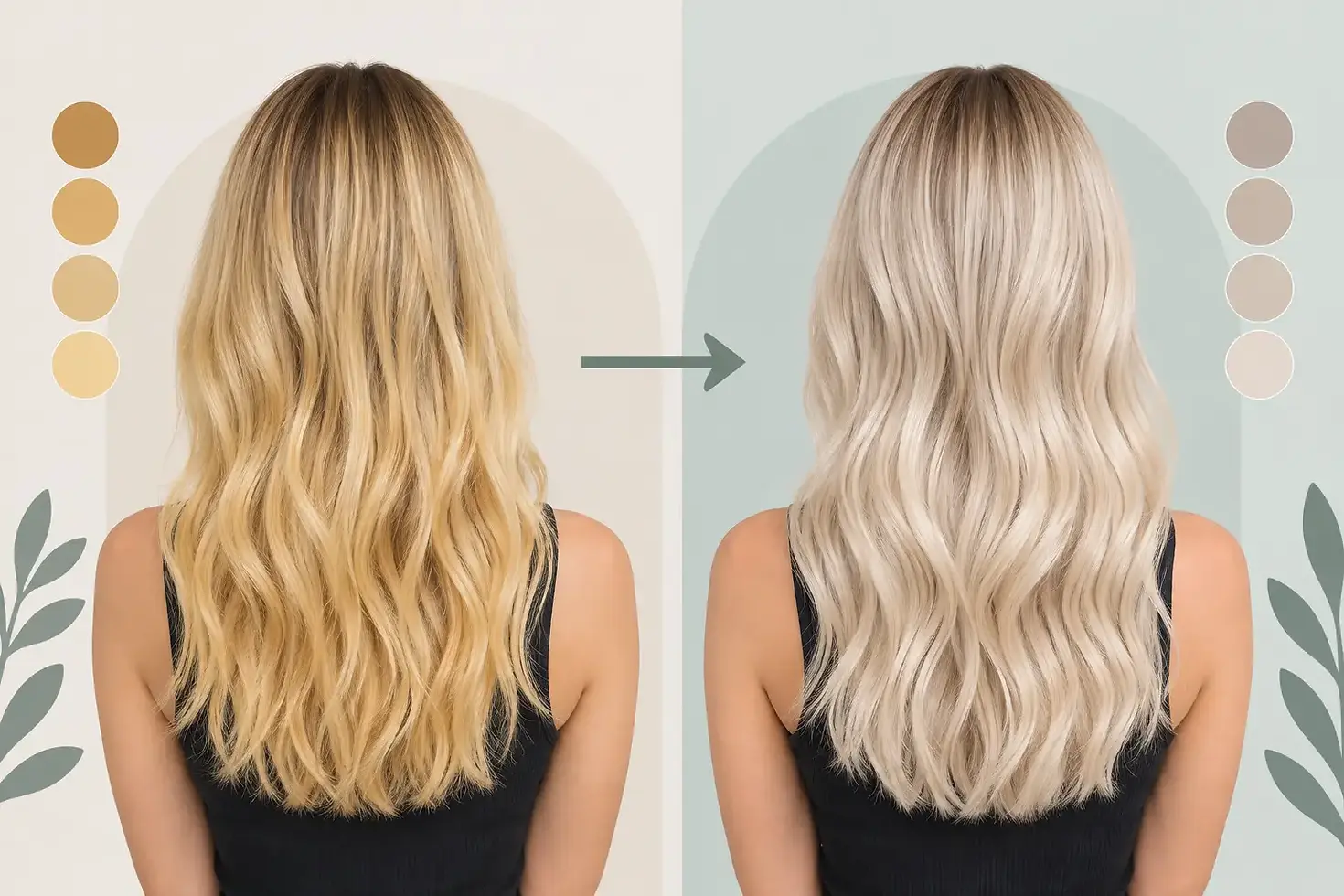
Blonde Correction Before and After Example Guide
A blonde correction before and after example is rarely about taking someone from a colour they dislike to perfect platinum in one appointment. More often, it is a careful reset: softening bands, balancing warmth, protecting fragile lengths and creating a blonde that looks believable in natural light. The most satisfying result is not simply lighter hair. It is hair that feels considered, healthy and suited to the person wearing it.
For clients who care about both beautiful colour and conscious salon choices, that patience matters. Hair correction can involve significant product, water and energy use, so an intentional plan helps avoid unnecessary processing, avoidable waste and the cycle of chasing a quick fix that creates more damage later.
What a blonde correction actually corrects
A colour correction begins when the existing blonde does not behave as intended. Perhaps an at-home bleach has left uneven yellow and orange areas. Maybe old highlights have created stripes through the mid-lengths, or a toner has faded to a dull khaki tone. Sometimes the issue is less dramatic: the roots are bright, the ends are porous and the overall colour no longer looks connected.
The word “correction” can make the process sound severe, but it does not always mean stripping everything back. A skilled colourist first works out what is sitting in the hair, how the hair is responding and what can be achieved without compromising its condition. The right approach may be to lighten selected sections, deepen others, add a gentle root shadow or refresh the tone rather than bleach the whole head.
That distinction is essential. Blonde hair is not one shade. Creamy beige, lived-in bronde, cool pearl, golden honey and clean bright blonde all require different underlying levels of lightness. Trying to force every head of hair towards one icy result is often where unnecessary damage begins.
A realistic before and after example
Imagine hair that has been lightened at home several times. Before the appointment, the roots are pale yellow, the mid-lengths have a strong orange band and the ends are very light but dry. There are also a few darker pieces around the back, where previous colour did not lift evenly.
A rushed response would be to apply bleach from roots to ends and hope a strong toner pulls it together. That may make the hair look temporarily more uniform, but it risks pushing the lightest ends beyond what they can tolerate. The result can be breakage, patchy tone and another difficult appointment only weeks later.
A thoughtful before-and-after plan looks different. The colourist may first assess elasticity, porosity and the history of colour services. The orange band might be lightened in fine, controlled sections while the delicate ends are protected or left untouched. Darker pieces may be blended with foils or painted highlights rather than aggressively lifted. A toner is then chosen to neutralise unwanted warmth while keeping enough softness that the colour does not turn flat or grey.
After the appointment, the hair may not be paper-white - and that is a good outcome. Instead, the blonde can look even from root to end, with a soft, neutral-beige finish and a more natural transition through the lengths. The ends feel better because they have not been subjected to another full round of bleaching. The change is visible, but the health of the hair remains part of the result.
Why the consultation shapes the result
Photos are useful, yet they cannot tell the full story. Lighting can hide banding, filters can alter tone and a picture of someone else’s hair does not reveal their starting point, density or hair history. An honest consultation is where expectations become a plan.
Your colourist should ask about home colouring, box dye, henna, previous lightening, swimming, medication and your usual styling routine. These details influence both safety and timing. Metallic salts from old colour, for example, may affect how hair reacts. Heat styling and frequent ocean swims can also change the condition and tone of blonde lengths.
It is equally helpful to talk about your real goal. Do you want to look noticeably brighter straight away? Are you happy with a softer blonde while strength is rebuilt? Do you prefer fewer, longer appointments or smaller changes over several visits? There is no morally superior answer. A plan should suit your hair, your budget, your lifestyle and the maintenance you are genuinely willing to keep up.
The trade-off between speed and hair condition
The most difficult part of a correction is often accepting that the healthiest result may take more than one session. This is not a lack of skill or ambition. It is professional judgement.
Lightening works by changing pigment within the hair, and previously lightened sections do not have the same resilience as untouched hair. When hair has uneven colour, a colourist must often address darker areas without over-processing the already pale ones. That takes precision and, sometimes, time between appointments.
A staged correction can be kinder to the hair and more responsible from a sustainability perspective. It reduces the likelihood of repeating major chemical services because the first rushed result has caused breakage or unwanted tone. It also encourages a lower-maintenance colour design, with blended roots and dimensional placement that grows out gracefully.
This does not mean every correction needs multiple appointments. If the hair is in good condition and the colour difference is modest, a single service may achieve a significant improvement. The point is to let the hair, not social media timelines, determine the pace.
Tone is only one part of the after photo
Toner is often treated as the hero of blonde transformation, but it is best understood as the finishing detail. It can refine yellow, soften brassiness and create a cooler or warmer direction. It cannot repair breakage, erase strong dark bands or make severely compromised hair healthy again.
A good after result considers shine, movement and how the blonde will fade. Very porous ends can grab cool pigments and appear smoky at first, then fade quickly. In that situation, a slightly warmer, more balanced toner may look better for longer. The best blonde is not always the coolest one. It is the shade that works with your skin tone, your existing lift and the condition of your hair.
At Mane Ethical Hairdressing, this kind of colour work is approached as a partnership. High-performing blonde services and more conscious product choices can sit together when every step is intentional, from the colour plan to the care advice that follows.
Caring for corrected blonde at home
The appointment sets the direction, but home care protects the investment. Wash blonde hair only as often as your scalp and lifestyle require, using products suited to coloured hair and avoiding very hot water where possible. A regular conditioning treatment can support softness, particularly through older lightened ends.
Purple shampoo can be useful when yellow tones begin to show, but more is not always better. Used too often on porous hair, it may leave pale ends looking violet, grey or uneven. Follow your colourist’s recommendation rather than treating it as an everyday cleanser.
Heat protection also matters. Blonde hair can be particularly vulnerable to repeated high heat from straighteners, curling tools and hot blow-dries. Lower settings and less frequent styling help preserve the feel of the hair between appointments. If you swim regularly, wetting hair with fresh water first and rinsing it soon after can reduce the impact of salt or chlorine.
Choosing a correction that you can live with
The strongest before-and-after images show more than a dramatic colour shift. They show restraint. A beautiful correction respects what the hair can safely do now and leaves room for future changes without sacrificing condition.
If your blonde feels patchy, brassy or unlike you, bring clear photos, share your full colour history and be open to a plan that prioritises longevity over a one-day transformation. A blonde you can enjoy, maintain and feel good about is always worth the extra care.


Comments